微服务平台整体架构设计

概述
本文将深入介绍一个现代化的微服务平台架构设计。该平台采用微服务架构,融合了AI能力、文档处理和在线协作等核心功能。通过合理的服务拆分和技术选型,实现了高可用、可扩展的企业级应用平台。
架构概览
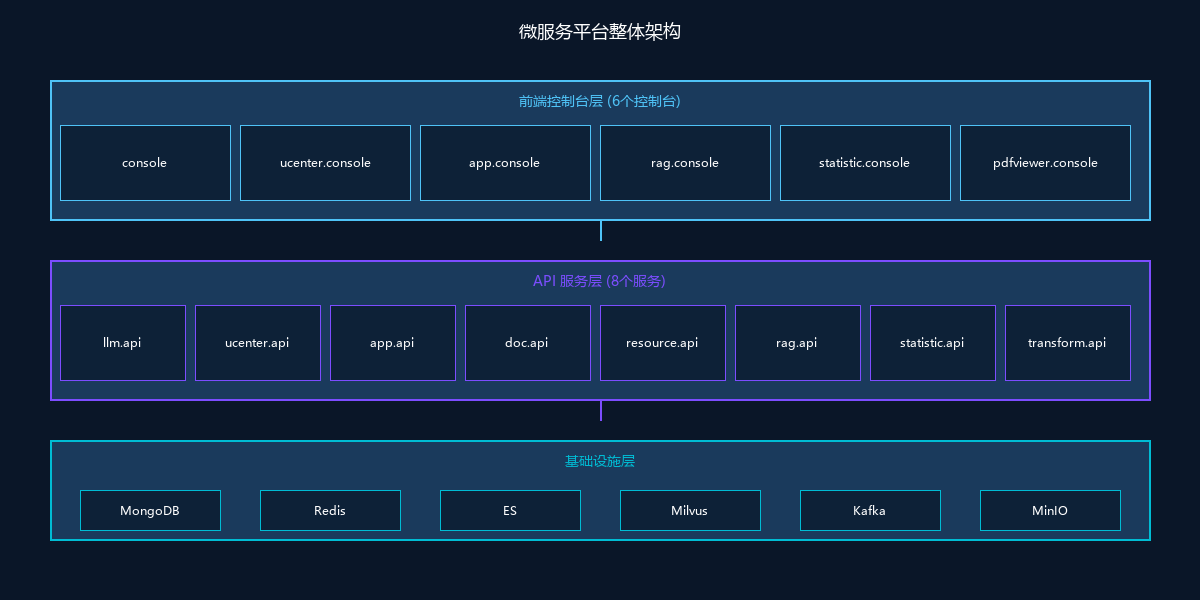
整体架构图
核心服务详解
1. 前端控制台层
前端采用微前端架构,基于腾讯无界(Wujie)框架实现:
| 控制台 | 功能 | 技术栈 |
|---|---|---|
| console | 主控制台入口 | Umi Max + React 18 |
| ucenter.console | 用户与权限管理 | Ant Design Pro |
| app.console | 应用管理 | Ant Design |
| rag.console | 知识库管理 | Ant Design X |
| statistic.console | 数据统计与监控 | Ant Design Pro |
| pdfviewer.console | PDF文档阅读 | 自定义组件 |
2. API服务层
后端服务采用Node.js + Fastify和Python + FastAPI混合架构:
Node.js服务 (7个)
// 典型服务结构 - llm.api/app.js
import Fastify from 'fastify'
import cors from '@fastify/cors'
import autoload from '@fastify/autoload'

const app = Fastify({
  logger: { level: 'info' }
})

// CORS配置
await app.register(cors, {
  origin: true,
  credentials: true
})

// 自动加载路由和插件
await app.register(autoload, {
  dir: new URL('./routes', import.meta.url),
  dirNameRoutePrefix: false
})
Python服务 (1个)
# transform.api/main.py
from fastapi import FastAPI
from contextlib import asynccontextmanager

@asynccontextmanager
async def lifespan(app: FastAPI):
    # 启动时初始化
    await init_services()
    yield
    # 关闭时清理
    await cleanup()

app = FastAPI(lifespan=lifespan)

@app.get("/health")
async def health_check():
    return {"status": "healthy"}
技术栈总览
前端技术栈
| 技术 | 版本 | 用途 |
|---|---|---|
| React | 18.3.1 | UI框架 |
| TypeScript | 5.9.3 | 类型系统 |
| Umi Max | 4.6.34 | 企业级框架 |
| Ant Design | 6.3.3 | UI组件库 |
| Ant Design X | 2.5.0 | AI组件库 |
| Wujie React | 1.0.24 | 微前端框架 |
后端技术栈
| 技术 | 版本 | 用途 |
|---|---|---|
| Node.js | ES Module | 运行环境 |
| Fastify | 5.2.1 | Web框架 |
| Fastify CLI | 7.3.0 | 开发工具 |
| Mongoose | 8.10.0 | MongoDB ODM |
| Python | 3.12 | 转换服务 |
| FastAPI | 0.115.12 | Python框架 |
基础设施
| 组件 | 用途 |
|---|---|
| MongoDB | 主业务数据存储 |
| Redis | 缓存、会话、分布式锁 |
| Milvus | 向量数据库(RAG) |
| Elasticsearch | 日志与全文搜索 |
| Kafka | 消息队列 |
| MinIO | 对象存储 |
通信协议
1. REST API
用于前端与后端的标准HTTP通信:
// routes/root.js
export default async function (fastify, opts) {
  fastify.get('/', async (request, reply) => {
    return { message: 'Hello from micro-platform!' }
  })
}
2. gRPC
用于服务间高性能通信:
// userInfo.proto
syntax = "proto3";

service UserInfoService {
  rpc GetUserInfo(UserInfoRequest) returns (UserInfoResponse);
}

message UserInfoRequest {
  string userId = 1;
}

message UserInfoResponse {
  string userId = 1;
  string username = 2;
  string email = 3;
}
3. SSE (Server-Sent Events)
用于大模型流式响应:
// llm.api中SSE实现
fastify.get('/chat/stream', async (request, reply) => {
  reply.raw.writeHead(200, {
    'Content-Type': 'text/event-stream',
    'Cache-Control': 'no-cache',
    'Connection': 'keep-alive'
  })

  // 流式输出AI响应
  for await (const chunk of llmStream) {
    reply.raw.write(`data: ${JSON.stringify(chunk)}\n\n`)
  }

  reply.raw.end()
})
数据流架构
请求处理流程
用户请求
    ↓
Nginx (反向代理)
    ↓
APISIX (API网关)
    ↓
前端控制台 / 后端API
    ↓
业务服务 (Fastify/FastAPI)
    ↓
数据层 (MongoDB/Redis/Milvus)
异步消息流
业务服务 → Kafka → 消费者服务
              ↓
        统计分析/日志处理
安全设计
1. 认证授权
- JWT Token认证
- OAuth 2.0集成
- RBAC权限控制
2. 数据安全
- 敏感数据加密存储
- HTTPS传输加密
- API限流保护
3. 网络安全
- CORS跨域配置
- IP白名单
- 请求签名验证
监控与运维
1. 日志系统
使用Pino实现结构化日志:
import pino from 'pino'

const logger = pino({
  level: process.env.LOG_LEVEL || 'info',
  formatters: {
    level: (label) => ({ level: label })
  }
})
2. 监控指标
- Prometheus指标收集
- Grafana可视化面板
- APISIX网关监控
3. 健康检查
// 服务健康检查端点
fastify.get('/health', async () => {
  const checks = await Promise.all([
    checkDatabase(),
    checkRedis(),
    checkExternalServices()
  ])

  return {
    status: checks.every(c => c.healthy) ? 'healthy' : 'degraded',
    checks
  }
})
总结
微服务平台的整体架构设计充分体现了现代化、模块化和AI-Native的设计理念:
- 微服务拆分:按业务领域合理拆分服务,每个服务职责单一
- 技术多样性:Node.js和Python混合使用,发挥各自优势
- 通信协议灵活:REST、gRPC、SSE多种协议并存
- 基础设施完备:完整的数据存储、缓存、消息队列体系
- 可扩展性强:插件化设计、微前端架构支持快速迭代
下一篇将深入介绍AI-Native架构中大模型服务的设计与实现。